Cultural heritage in Salvador
Stories
Salvador's history is closely intertwined with whales.
During Brazil's colonial era, humpback, minke and sperm whales were hunted and used as an energy source for the city's growth. There is even a neighbourhood, Armação, whose name refers to one of the former whaling stations. Historical records from the 17th century also show that whale blubber was used as a sealant against damp in coastal buildings, as described by the Marquis of Lavradio in a letter to Portugal. The fishing community of Itapuã also has a rich whaling history and was once a major pillar of the city's economy.
Today, Salvador has transformed from the "city that hunted whales" into the city that protects them. Humpback whales play a central role in local legends and stories and are an integral part of the community's cultural identity, passing on knowledge and values from one generation to the next. Protecting their habitat preserves an important link with local culture and helps keep these stories and traditions alive.
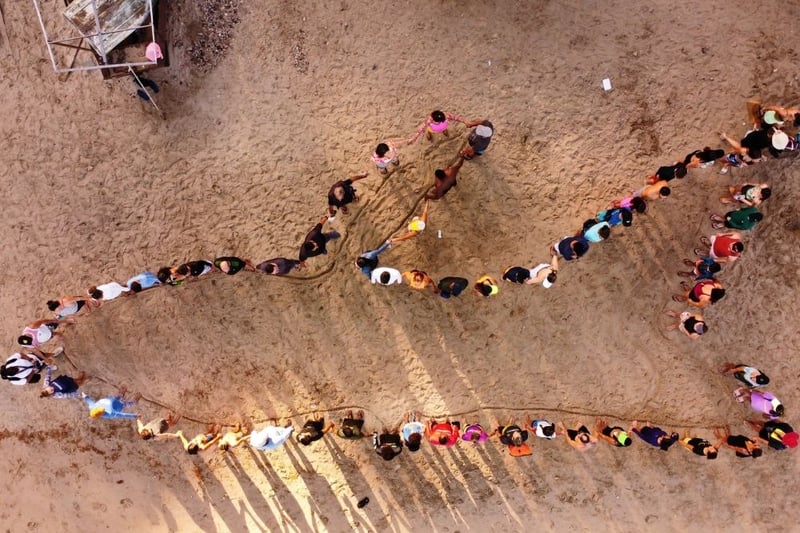
Since 2014, Redemar has organised the annual Whale Festival, usually held in September, to encourage discussion about the connection between people and the ocean through environmental education, literature and cultural activities, promoting a harmonious and respectful relationship between humans and the sea. The 2025 festival included a maritime expedition from Salvador to Abrolhos to record humpback whales, environmental education in state schools, round-table discussions with fishermen, and microplastic analysis in the water. Whale tail sculptures made from waste were also created and exhibited at various locations across Salvador.
Redemar also organises the Ocean Conference every two years, focusing on a range of topics relating to the marine ecosystem, and also runs the Blue Education Project, bringing ocean education and culture to state schools throughout Bahia.