Education and research in Salvador
Stories
Developing awareness campaigns to educate local communities, tourists, and fishermen about the importance of humpback conservation and marine ecosystems.
Through these activities, Redemar emphasizes the economic and cultural benefits of a healthy humpback population and community´s role in protecting these species.
Redemar has created the Turma da Juba Project to provide environmental education for children up to the age of 12. It is Brazil’s first educational booklet on whale migration and best practices during the migration season. The initiative was carried out in collaboration with the Chico Mendes Institute for Biodiversity Conservation (ICMBio) and the National Centre for Research and Conservation of Aquatic Mammals (CMA).
Redemar has also been working on an initiative to establish ‘Ocean Citizenship’, a way of reconnecting the city’s residents with the ocean in a harmonious and respectful manner. This involves inviting guests to experience and join their scientific team on expeditions, so that they can better understand the importance of the ocean and how daily life in the city depends on its well-being.
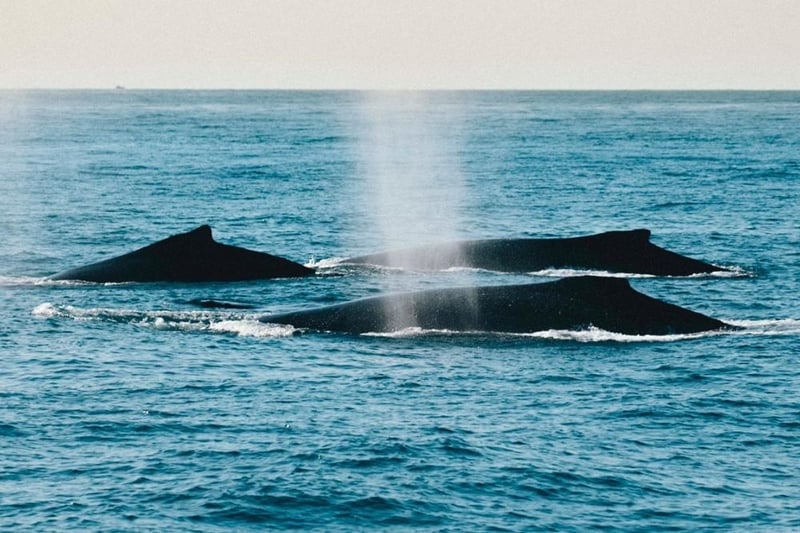
The “Projeto Baleias Soteropolitanas”, an initiative of Redemar, monitors humpback whales in Todos os Santos Bay. There is also a citizen science scheme, through which members of the public can report to Redemar the location where they have sighted a humpback whale, and this data is plotted on a map that is accessible to anyone. Citizen science data helped identify a decline in sightings between 2022 and 2024.