
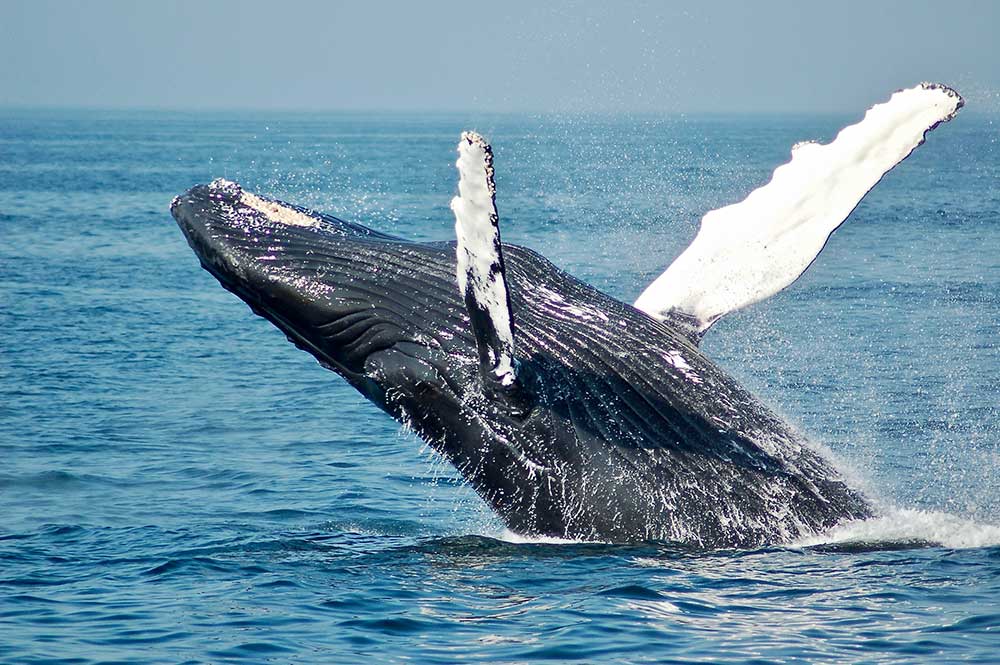
For the past five centuries, the people of the Azores have had a strong connection to cetaceans. It began with the use of stranded whales and captured dolphins as a source of food, but it wasn’t until the mid-eighteenth century, when north American whalers introduced sperm whale hunting to the region, that the Azoreans became actively involved as crew.
Whaling eventually became an integral part of the Azorean cultural identity, although it’s thankfully no longer practiced. With the rise of whale watching, conservation of living whales has taken on a new importance. Today, the same land-based whale lookouts, known as “Vigias,” that were once employed by whalers are now used by whale watching companies to guide their tours.
Since the beginning of whaling, ivory and whalebone became raw materials to produce objects for utilitarian and decorative purposes. This artistic manifestation is traditionally linked to whaling and constitutes the most authentic and well-known manifestation of the so-called “whaling art”.
Various events throughout the islands aim at celebrating the Azores settlement, the Azores as a mercantile route and crossroad of Atlantic peoples, the development of fishing and the whaling industry, with its inherited traditions. Some events, as the regattas in whaling boats, contribute to unite the islands of the archipelago.
The transition from whaling to whale watching is highlighted in the festivities, showcasing the evolving relationship between Azoreans and cetaceans as a symbol of their culture and legacy, which they proudly celebrate. Today, artists, musicians, and craftsmen find endless inspiration in the presence of whales, and their creations are embraced by both locals and visitors alike. These works can also be found in chronicles, novels, poetry, television, newspapers, magazines, cinema or music.
Helpful links
Apply to become a Wildlife Heritage Area