Human-cetacean conflict solutions - Azores
Stories
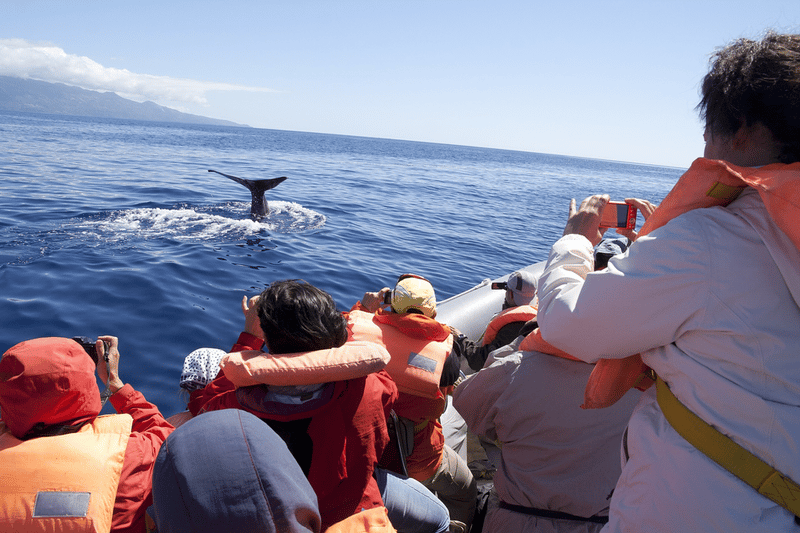
Whaling holds a significant position in the cultural heritage of the Azores, playing a vital role in shaping the local identity. However, it was the emergence of the Azorean whale watching industry that truly positioned living whales as a natural treasure and symbol of the Azores.
Whale watching companies in the Azores are licensed by the local government and follow strict regulations and protocols around cetaceans at sea.
The whale watching regulations enforced in 1999 were the result of a collaborative process involving different sectors of the community, such as scientists, authorities, and all whale watching tour operators. Subsequently, in 2003, 2004 and 2019, updates were made to licensing, whale watching operation zones and approaching regulations.
The number of licences is restricted per area, to avoid overcrowding the animals. Also, the archipelago is divided into 3 zones for whale watching licensing purposes: zone A (Faial, Pico and São Jorge), zone B (São Miguel) and zone C (Corvo, Flores, Graciosa, Santa Maria and Terceira Island). For zone C, there is not a maximum number of licences defined, but due to the rapid increase in the number of operators with licenses, no more licenses are allowed since 2019.
Many of the whale watching operators in the Azores have gone above and beyond in their commitment to responsible practices, with some also collecting valuable data to help further scientific understanding of cetaceans. Many have signed up to the Azores Sustainability Charter, which is a regional initiative, that focuses on recording and reporting sustainability indicators, and members must define sustainability priorities, deliver three annual objectives, and publish annual sustainability reports.