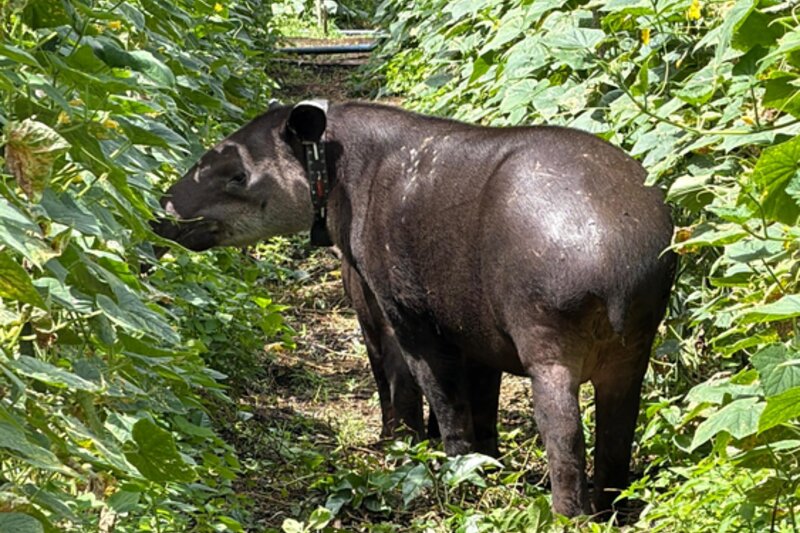
When tapirs began returning to Bijagua after years of absence, they also started feeding on agricultural crops, creating tension with local farmers. Initially, the species was seen as a threat to livelihoods, leading to negative perceptions and resistance to conservation. In response, local initiatives focused on identifying and testing techniques that could support coexistence between tapirs and farmers. Different strategies were explored to reduce crop damage while protecting the species, combining practical solutions with community participation. Through continuous environmental education, community dialogue, and awareness initiatives, these efforts helped reshape local attitudes. As understanding grew around the ecological importance of the tapir, and as coexistence strategies began to show results, the perception gradually started to change.
Over time, the community embraced the presence of tapirs, recognizing their role in ecosystem health. Today, what was once a source of conflict has become a symbol of pride, demonstrating that coexistence between people and wildlife is possible. While these techniques have proven effective, coexistence remains an ongoing process. It requires continuous adaptation, commitment, and collaboration, as the balance between conservation and livelihoods is something that must be actively maintained over time
Helpful links

Apply to become a Wildlife Heritage Area