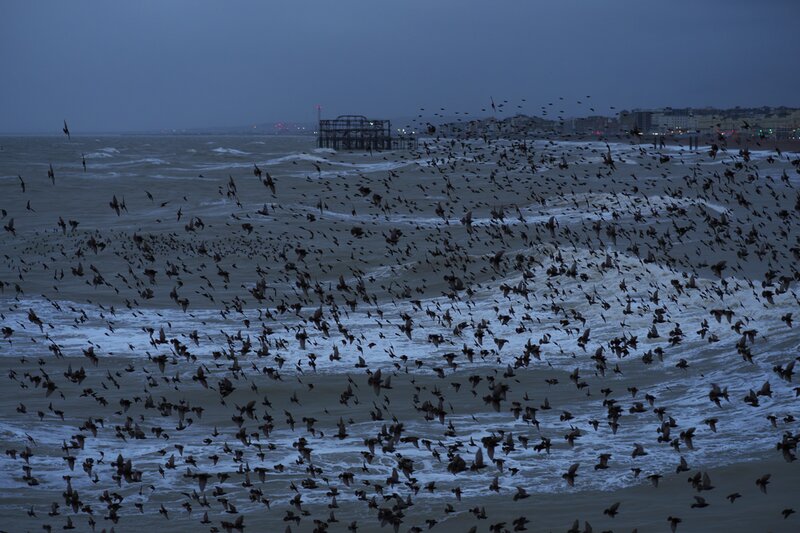
Accurate data is the foundation of conservation; without precise counts, we cannot truly understand the challenges birds face. Historically, Starling records in Brighton were haphazard, relying on unreliable estimates. However, for the last five years, Steve Geliot has worked to change this by meticulously counting the population during the peak of the murmuration season. This year, assisted by volunteer Zack Sheers and photographer Emma J Crosby, the team has refined this process, using high-resolution photography and video to manually count every individual bird.
This vital evidence collection is made possible by strong partnerships with the Brighton Palace Pier, where the Starlings roost, and the West Pier Trust, where the birds gather on the historic ruins before their evening flight.
The data reveals a stark reality: since the 1960s, when Brighton’s Starling population exceeded 100,000, numbers have plummeted by over 80%. Yet, there is a genuine cause for optimism. This year’s count reached approximately 15,500—an increase from recent lows. Reaching a threshold of 20,000 birds would mark a major turning point, as a roost of that size is large enough to attract migrating Starlings from mainland Europe, further boosting the local population. While there is still work to do, the trend is moving in the right direction.
Helpful links

Apply to become a Wildlife Heritage Area