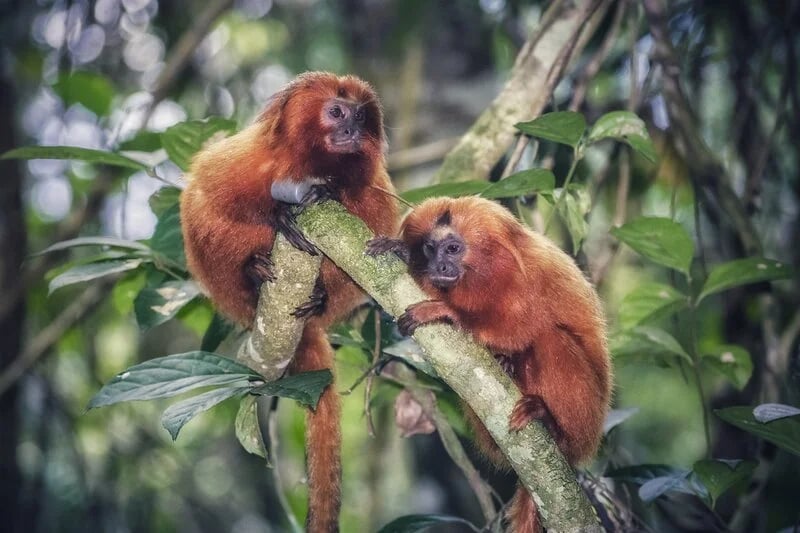
A case of successful conservation at Golden Lion Tamarin Ecological Park
Stories
In the 1970s, the golden lion tamarin population in the wild was on the brink of extinction, with an estimated population of less than 200 individuals. This alarming number sparked efforts to save the species.
Actions included advocating for the creation of protected areas like the Poço das Antas Biological Reserve in 1974, reintroducing tamarins from captivity, investing in environmental education with local communities, campaigning against wildlife trafficking, restoring the Atlantic Forest, and monitoring wild golden lion tamarin populations.
In 1992, all these efforts began to be coordinated by the Golden Lion Tamarin Association. With the help of 146 animals reintroduced from zoos, the population reached 1,000 by the year 2000. In the years that followed, this success continued, with numbers growing to 3,700 in 2014.
In 2017, however, a yellow fever outbreak in the region caused the first major setback since the program began, resulting in a loss of 32% of the wild population. An emergency census estimated the population had dropped to 2,500, and immediate action was needed. Together with other partners, AMLD developed a successful vaccine to start a pioneering vaccination program for tamarins in the wild. Today, more than 500 animals have been immunized.
The last census, in 2023, brought great news: the population has reached the historic number of 4,800 tamarins in the wild. This recovery was only possible because there is more forest in the region—a result of restoration efforts—and the golden lion tamarins are now occupying new areas.