Golden Lion Tamarin Ecological Park Heritage Area
Information
Description
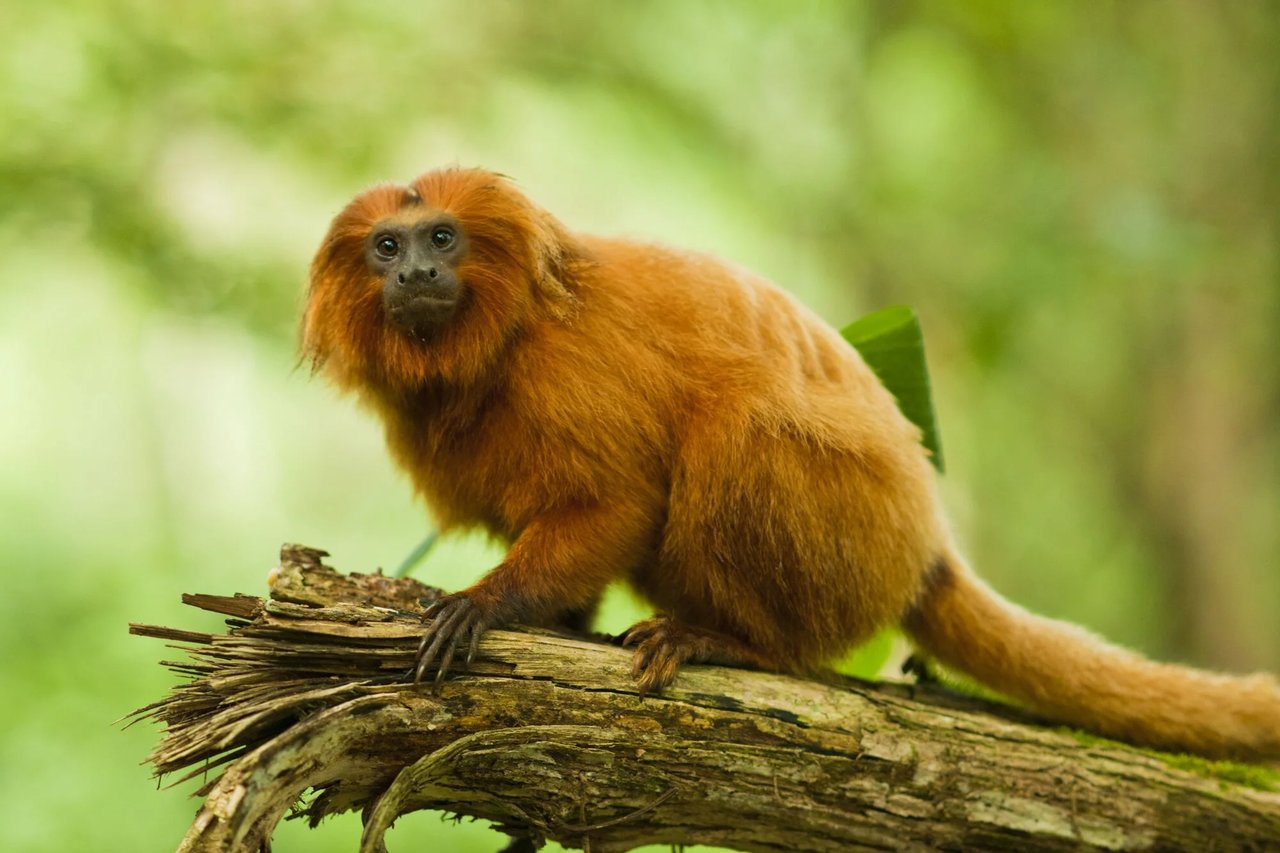
The Golden Lion Tamarin Ecological Park is a unique park! All the attractions are related to the habitat of the golden lion tamarin, the Atlantic Forest, and the conservation actions to save the species from the risk of extinction. There are several options for trails, viewpoints and opportunities to contemplate nature. Besides the golden lion tamarin, the Ecological Park also protects other endangered species of the Brazilian Atlantic Forest, such as the maned sloth (Bradypus crinitus).
Motivation
Created in 1992, the Golden Lion Tamarin Association is a world reference for its work to save the golden lion tamarin from extinction. For over 15 years we have been working with ecotourism as an awareness-raising tool to involve people in the conservation of the species. In addition, ecotourism can be an instrument for generating employment and income, promoting a better quality of life for the people who share their homes with the golden lion tamarin, which we understand is also fundamental for forming allies of the species. That's why this recognition helps us in this mission and to consolidate the tourist destination of the Golden Lion Tamarin.
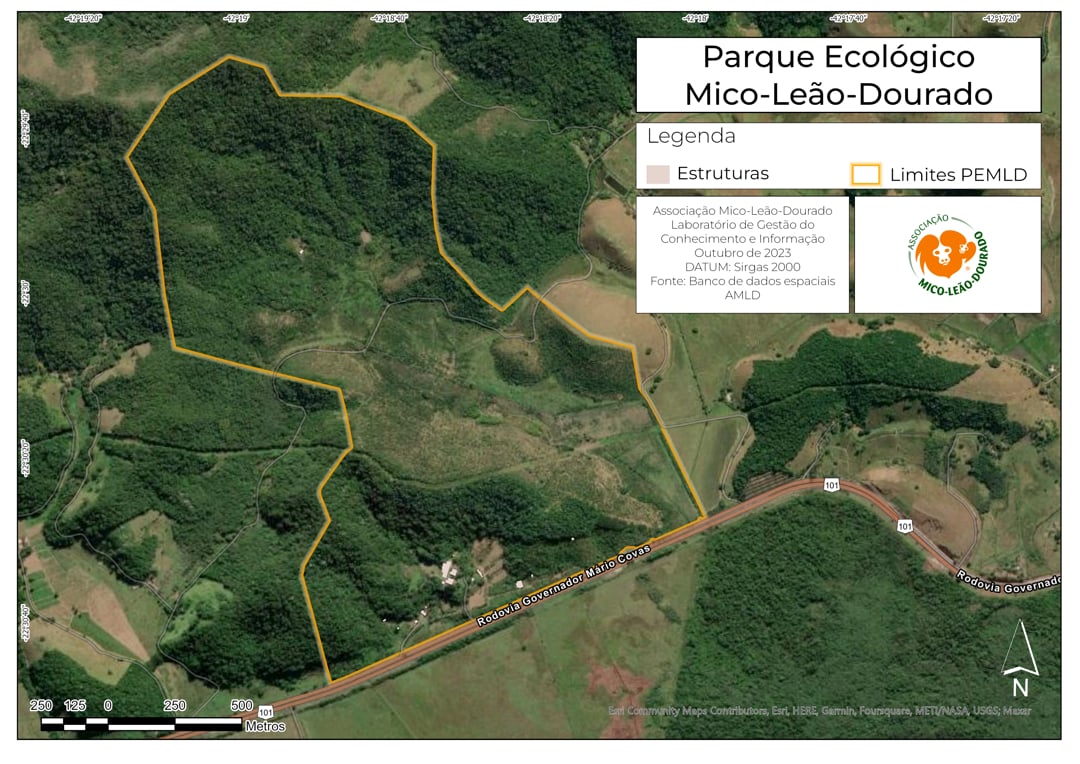
Boundary map
Species or habitats
The golden lion tamarin is a primate species endemic to the lowland Atlantic Forest of the state of Rio de Janeiro, Brazil. The tamarins gather in family groups, composed by an average of 4-6 individuals, but can reach up to 12 individuals. They sleep in tree hollows and tangled vines, have a diurnal habit, and feed on fruit, nectar, sap, tree gum, small amphibians and various invertebrates. All members of the family help care for their young. They are currently classified as "endangered" by the IUCN. They are territorial, with conflicts between groups when they meet, and each group has an average home range of 40 ha.
Overview
Title: Golden Lion Tamarin Ecological Park Heritage Area
Level: Candidate
Name/location: Golden Lion Tamarin Ecological Park Heritage Area
Name/species/group: Golden Lion Tamarin
Name/habitat/group: Aardvark
Country: Brazil
Approximate size (sq km): The Golden Lion Tamarin Ecological Park has a total size of 2,37 km². However, the NGO that runs the Park (Associação Mico-Leão-Dourado) also conducts golden lion tamarins watching in a partner area of 1,39 km²
Area features
Golden Lion Tamarin
Stability
In the 1970s, the population of golden lion tamarins was estimated at just 200 individuals in the wild. With the start of the species' Conservation Program in 1983, which involved the reintroduction of specimens born in captivity, the population reached 3,500 individuals in 2014. With the outbreak of yellow fever between 2017 and 2018, the population fell to 2,300 tamarins. But according to the latest census carried out by AMLD, released in 2023, the species is on the rise again, with an estimated population of 4,800 golden lion tamarins.
Threats
Historically, the deforestation of the Atlantic Forest in the state of Rio de Janeiro, especially in low-lying areas that are more suitable for agricultural use, has been the main threat to the golden lion tamarin, leaving a fragmented landscape that even today compromises what little remains of the species' habitat. The habitat fragmentation is enhanced by the existence of linear infrastructures in the area, such as oil and gas pipelines, power transmission cables, and one of the longest Brazilian roads, the BR101. Added to this threat is wildlife trafficking and diseases such as yellow fever (which wiped out a third of the tamarin population between 2016 and 2018).
Actions taken for protection
Forest restoration, implementing strategic ecological corridors (even supporting the construction of the first vegetated viaduct of Latin America) and encouraging the creation of protected areas are important actions to tackle habitat fragmentation and loss. Environmental education actions, social engagement and ecotourism are also carried out to increase people's involvement conservation. Through agroecology and the production of native Atlantic Forest seedlings we create an economic chain related to conservation. In addition, we started a pioneering vaccination of tamarins in the wild, guaranteeing a safe population immunized against the disease.
Community importance
To promote the golden lion tamarin conservation, we created the Golden Lion Tamarin Destination, aiming to foster ecological and low-impact tourism and help with economic development and job creation in the region. Through the restoration of the Atlantic Forest, we are directly contributing to the functioning of the restoration economic chain in the region, with the purchase of tree seedling from nurseries runned by 5 different families of local small farmers, and by hiring local companies to plant the trees. In addition, the air quality, carbon sequestration and other ecosystem services provided by the forests planted benefit the health of the population of the area.
Wildlife watching guidelines
Watching the golden lion tamarin in the wild follows a series of guidelines, such as a maximum limit of 20 people per visit, a maximum of 1.5 hours of observation, obligatory use of masks to avoid spreading diseases, a minimum distance of 5 meters and non-interaction with the animals. Visitors are also required to show proof of yellow fever vaccination and at least two doses of Covid-19. The visits never occur in two consecutive days, with a maximum of three visits per week. Only one spot receives tourists, which means we only expose 1 group of golden lion tamarins to visits (around 14 animals).
Criteria
1. Cultural importance of wildlife
1.1.1 R$20.00 Banknote
In 2002, the golden lion tamarin was chosen to feature on the R$20.00 banknote. The choice represents the success story of the recovery of a species on the brink of extinction, making it a national symbol of hope and resilience for the Atlantic Forest.

1.1.2 Atlantic Verses (Versinhos atlânticos)
A poetry book written by the teacher Rosana, born and residing in Silva Jardim, RJ, the municipality of the Golden Lion Tamarin Ecological Park. The book is a collection of poems inspired by the fauna and flora of the Atlantic Forest, including the golden lion tamarin.

1.1.3 Atlantic Verses (Versinhos atlânticos)
A poetry book written by the teacher Rosana, born and residing in Silva Jardim, RJ, the municipality of the Golden Lion Tamarin Ecological Park. The book is a collection of poems inspired by the fauna and flora of the Atlantic Forest, including the golden lion tamarin.

1.2.1 Visitor Guide Training Course
In 2022, a training course on visitor guiding was delivered, targeting young residents of the São João River Basin APA, the AMLD's area of operation. The aim was to train guides from the region to be subsequently hired to work in the Park.

1.2.1 Visitor Guide Training Course
In 2022, a training course on visitor guiding was delivered, targeting young residents of the São João River Basin APA, the AMLD's area of operation. The aim was to train guides from the region to be subsequently hired to work in the Park.

1.2.2 Visitors at the Restoration Tower
The two photos show two of the guides hired to work in the Park, Paula Alfradique and Liviane Rocha, guiding visitors at the Restoration Tower attraction.

1.2.2 Visitors at the Restoration Tower
The two photos show two of the guides hired to work in the Park, Paula Alfradique and Liviane Rocha, guiding visitors at the Restoration Tower attraction.

1.3.1 Rio de Janeiro Agroecology Network
A meeting of the Rio de Janeiro agroecology network held at the Golden Lion Tamarin Ecological Park. Agroecology is not solely about the non-use of pesticides in food, but also the valuing of the culture of traditional peoples, respect for diversity, the promotion of social and gender equality, and the recovery of natural habitats.

1.3.2 Launch of the GEF Private Areas Project
Phase II of the GEF Private Areas Project, coordinated by the National Secretariat for Biodiversity of the Ministry of the Environment and Climate Change, operating within the territory of the São João River basin, was developed through a participatory process with 80 local stakeholders, including rural landowners, family farmers, researchers, and public authorities.

1.4.1 Citizen Science Network Proposal
A document detailing the ‘Miconsciência’ citizen science and participatory monitoring network, to be implemented by the AMLD through the GEF Private Areas project. The aim is to increase social engagement in biodiversity conservation, whilst data is systematised and used to inform new conservation actions.
