The Salvador Whale Heritage Area
Information
Description
The Salvador Whale Heritage Area is one of the largest bays in the world, Baía de Todos os Santos, (Bay of All Saints), which is regarded as the Capital of the Blue Amazon (the vast maritime area under Brazil’s jurisdiction, covering approximately 5.7 million square kilometers in total).
Salvador is the capital city of the Brazilian state of Bahia and served as Brazil’s first capital from 1549 to 1763. Situated in the Zona da Mata, a sub-region along the east coast of Brazil’s North-East Region that stretches from eastern Rio Grande do Norte to southern Bahia, Salvador is a major global tourist destination renowned as a centre of Afro-Brazilian culture and celebrated for its vibrant colonial architecture and rich African heritage. The city is well connected to Brazil’s main cities and offers direct international flights to Europe and North and Latin America.
Salvador’s Whale Heritage Area recognises the importance of Brazil’s wetlands and coast and focuses on and benefits from the short sailing time required for visitors and scientists to see humpback whales, whilst also offering the chance to view the city of Salvador and its historic buildings along the way, providing an insight into how the city came into being with the arrival of the Portuguese colonisers in 1549.
On the opposite shore of the bay to Salvador, stood one of the country’s largest whaling industries, and Salvador, the city that once hunted whales, is now the capital that preserves and cares for its whales, ensuring they are protected during their breeding season – the period when they migrate to warmer waters from Antarctica to give birth to their calves.
Motivation
Cetaceans play a crucial role in maintaining marine diversity and help to mitigate the great quantity of carbon in the atmosphere. However, many species face significant threats, such as climate change and pollution. Promoting Salvador as a Whale Heritage Area can contribute to maintaining the ecological balance and stability of local ecosystems and the local community.
The committee working towards achieving the Whale Heritage Area designation, is dedicated to educating the public about the importance of cetacean conservation. It promotes awareness of the issues facing wildlife and encourages the adoption of sustainable behaviours to protect the marine ecosystem. We believe that all forms of life deserve respect and protection, regardless of their economic value or usefulness to humans.
Local fishing communities now understand the importance of whales in ocean fertilization and fish supply. They understand that the oceans have an impact on our daily lives, just as our attitudes impact the oceans. Like these communities, we want to encourage a wider sense of respectful belonging and shared responsibility. Our aim is to help every citizen understand that the oceans are living ecosystems: sensitive biomes that directly support two essential ecosystem services—water and air—without which we cannot survive.
In addition to achieving this designation for the city and being part of an international network, we believe that by making these efforts everyone involved will become multipliers and make more sustainable commitments.
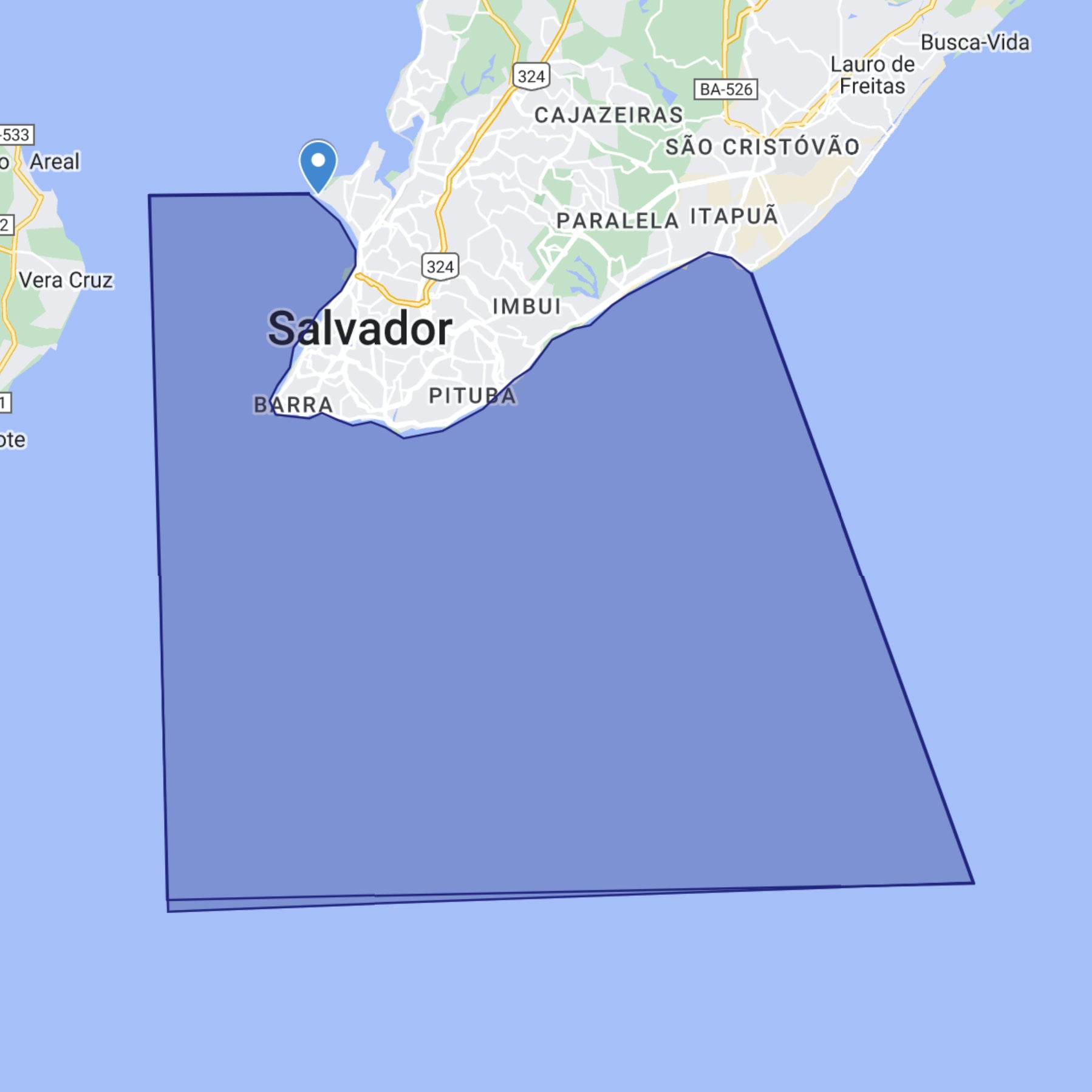
Boundary map
Species or habitats
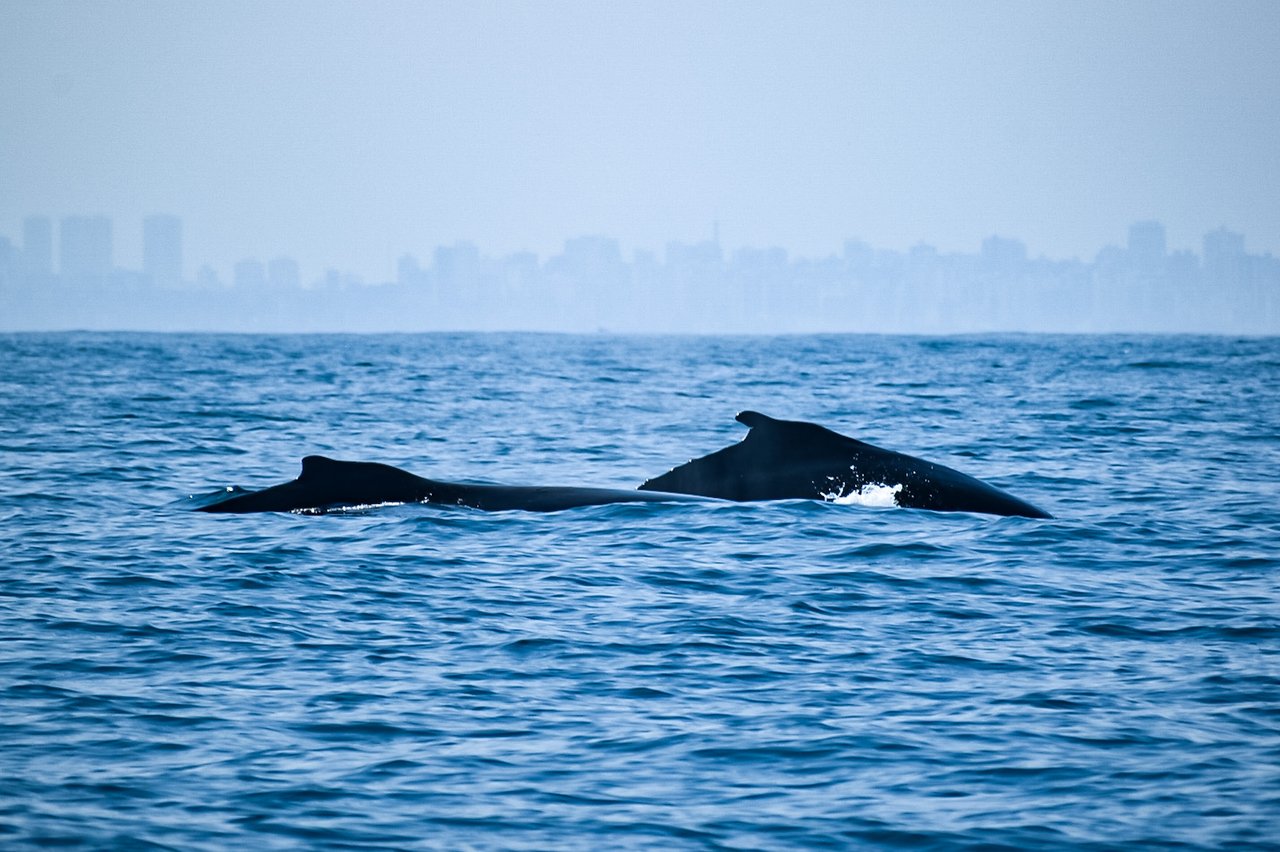
The Salvador Whale Heritage Area is home to various cetaceans.The area is a nursery for South Atlantic humpback whales, which migrate over 4,000 km from polar regions to tropical waters for breeding and the initial development of their calves. Their global population is recovering, with around 80,000 individuals, supporting tourism and ecological balance. Two resident dolphin species, the Bottlenose dolphin and Guiana dolphin, also inhabit the area. Salvador’s history is deeply linked to whales, as many humpback whales, minke whales, and sperm whales were hunted during Brazil’s colonial era.
Overview
Title: The Salvador Whale Heritage Area
Level: Candidate
Name/location: Salvador, Bahia
Name/species/group: Cetaceans
Country: Brazil
Approximate size (sq km): 800
Area features
Humpback whales (Megaptera novaeangliae), guiana dolphin (Sotalia guianensis) and bottlenose dolphin (Tursiops truncatus).
Stability
Bay of Todos os Santos is known as a birthing area for some Humpback whales (Megaptera novaeangliae), but specific local population trends remain unclear, highlighting the need for ongoing monitoring. Globally, populations have increased since the whaling ban, now estimated at 27,000 to 30,000 individuals, though continued protection remains essential.
Threats
The main threats to cetaceans in the Salvador Whale Heritage Area include entanglement in fishing gear, collisions with vessels involved in activities like fishing and shipping, and marine contamination. Humpback whales are susceptible to becoming entangled in fishing nets and they also have a habit of jumping out of the water and swimming near the surface, which puts them at risk of collisions with vessels, especially in areas with high maritime traffic. In addition, human activities such as shipping, offshore construction, and oil and gas exploration can generate high levels of underwater noise, which can disturb humpback whales and interfere with their communications, migrations, and feeding behaviours. Furthermore, changes in patterns of prey availability, such as declining schools of fish due to overfishing and climate change, can affect their feeding. Marine pollution, including oil spills, improper disposal of plastic waste, and chemical pollution, can contaminate humpback whales habitats.
Actions taken for protection
The Todos os Santos Bay Environmental Protection Area aims to protect biodiversity, conserve natural resources, and promote sustainable development. However, protecting humpback whales and dolphins requires more specific measures, including marine protected areas, compliance with navigation rules during breeding season, safe shipping routes, and greater public awareness. Continuous monitoring and research through the Projeto Baleias Soteropolitanas are essential for understanding threats and improving conservation strategies. Most initiatives are led by Redemar Brasil, which runs environmental education programmes, the Blue Education programme in Bahia state schools, and whale monitoring projects. The Pink Whale Project also promotes conservation through culture.
Community importance
Humpback whales are known for their acrobatics and impressive behaviour, making them a popular tourist attraction in coastal areas. Whale-related tourism brings significant economic benefits to local communities, boosting the economy and creating employment opportunities. They are also charismatic and emblematic species that inspire interest and curiosity, often serving as a vehicle for environmental education and awareness. By learning about humpback whales and their habitat, people gain a greater understanding of marine conservation and ecosystem balance. As top predators, they help control prey populations, contributing to healthy marine ecosystems, while their nutrient-rich excrement provides natural fertilisation for coastal ecosystems, benefiting local flora and fauna. Their presence also creates an emotional connection between people and nature, fostering appreciation of natural beauty, tranquillity, and a stronger connection to the natural world.
Wildlife watching guidelines
The Brazilian Institute of Environment and Renewable Natural Resources (IBAMA, Portuguese accronym) Ordinance 117/96 (amended by Ordinance No. 24/2002) prohibits whaling and provides establishes detailed guidelines for whale watching activities:
- Keep a distance of at least 100 meters
- Keep the engine in neutral
- Navigate without chasing or cornering the whales
- Stay up to a maximum of 30 minutes with the whale
- Only two boats at a time allowed
- Keep sight of the whale at a distance, until it dives again
- Leave the way clear for the whales to move
- The whales stay in groups, avoid separating them
- Manned aircraft, always 100m above the whales
- Drones always 150m above the whales (a recommendation of the Manual of Good Practice in Interaction with Marine Mammals - CMA/ICMBio 2019)
- Always take care of your rubbish so that no objects fall into the water
- Observe the whales and dolphins from the land or from inside the boat, swimming is forbidden and dangerous
- For the safety of everyone, touching the whales is not allowed.